
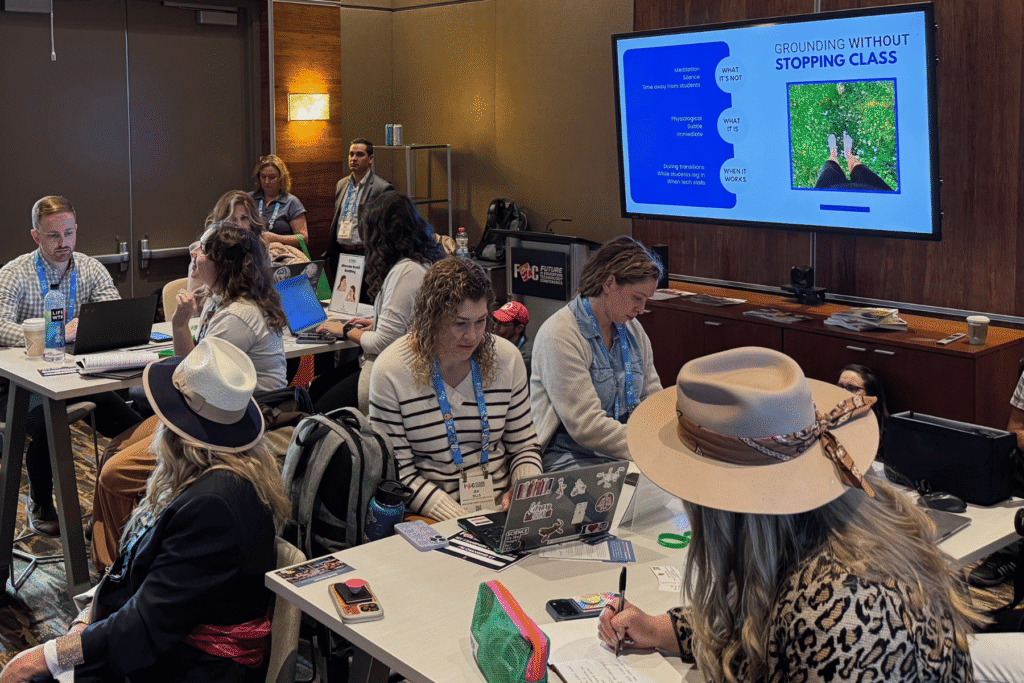
Moving toward a 5-in-5 mindset shifts understanding some people manage to something all of us share.
As this shift occurs, everyday interactions begin to change. Mental health becomes part of the culture, not just the crisis plan. Shared language emerges across roles and generations, openness replaces isolation, and connection grows across classrooms, teams, and systems.
Over time, this shared foundation strengthen well-being across the school community. Making it safer asking for support and easier to support one another at school, the home, and the community.
Step into a process that examines how your community talks about mental health in every corner of your organization, from policies and programs to social media and communications. Teams uncover language that reinforces stigma or silence and replace it with words that connect, include, and normalize mental health for everyone.
The audit reveals patterns, highlights gaps, and produces a clear roadmap for shared, inclusive language. Communities leave with actionable insights that strengthen understanding, improve communication, and support a culture where everyone feels seen, heard, and supported.
Imagine a dedicated space in your school, workplace, or community where people bring their brains to the gym. In this inclusive environment, all ages practice brain health strategies together, building shared understanding and habits that support mental health in everyday life.
#SameHere Global’s STARR (Stress & Trauma Active Release & Rewiring) Gym for the Brain™ helps communities notice, track, and act on mental health together, just as they do with physical health.
Mental health shapes learning, work, and relationships every day in schools and districts. Yet many systems respond only after crises occur; widening the gap between how people are actually living and the support structures meant to serve them.
Stress, uncertainty, and disconnection are part of daily life across all ages. Addressing mental health earlier through shared language and experiential strategies that help people notice, name, and respond to what they’re experiencing. An essential for healthy school cultures.
Shifting from a 1-in-5 mindset to a 5-in-5 understanding reflects this reality. It recognizes that mental health in schools touches everyone and enables clearer communication, stronger connection, and more responsive support across classrooms, teams, and systems.
This work continues to be grounded in partnerships with schools, organizations, and communities around the world. Together, we examine inherited systems, shape shared language, and design learning experiences that supports an inter-generational to unlearning and relearning as a community.





























Strengthening mental health culture in schools and districts begins with listening and shared understanding. Thoughtful conversation brings people onto the same page and creates a space to reflect, clarify priorities, and explore what support would be most meaningful for your community.
The goal is not to solve everything at once. It is to begin intentionally, together. To build a sustainable foundation for whole-child wellbeing over time.